
1 min
Unveiling the Secrets to New Manager Success
… [Read more](https://www.managersclub.com/unveiling-the-secrets-to-new-manager-success/ "Unveiling the Secrets to New Manager Success")

Location: Washington, DC
Current Role: Engineering Manager, GitHub

I actually have a degree in political science! After college, I worked in nonprofit management for a while managing an organization working with college students. There were a lot of things that I loved about management. It’s great to watch people grow and learn and help them develop skills they’ll use for the rest of their lives. I loved management but then I discovered code. I taught myself to code and spent a few years as a developer and when an interesting management opportunity arose, I decided to go for it and get back in to management. For me, when I think about management, I think about long-term wins and successes. I love the challenge of organizing a project, putting systems and processes in place (not unnecessarily but based on what I see that could help the team), and getting to know each individuals. It’s great to get a sense of each person and then give them opportunities to do their best work and remain engaged, interested, and excited about work. And ultimately, the best is when you’re still in touch with individuals or teams you managed for years to come. You are able to continue writing recommendations, watching them grow and progress in their careers, and see lifelong friendships that were made because of positive team dynamics that were in place.
One of the biggest challenges as a manager, especially moving from an IC role, is recognizing the different cycle of appreciation and accomplishment. As an IC, you can see progress every day, you can ship something, you can get a tangible thing out in to the world. As a manager, you are almost always playing a long game. You’re having a tough conversation that you learn 3 years from now was beneficial for the individual. You’re providing positive feedback that you learn in 6 months made a huge difference in that person’s professional growth and development. Almost never, however, as a manager, do you do something where you see an immediate return, and that is tough. You’re often faced with difficult decisions and choices and just trying to do the best you can with the information you have.
I think every hire needs to fill a roll on your team and at your company, and not just a technical role. When going in to hiring, I try to figure out what my team is missing both technically and, more importantly, non-technically. Who is the kind of person that will bring everyone to the next level and really allow the team to work together even better then they have been. I do not believe in long take home technical challenges (I consider anything longer than 2 hours too long) because it disadvantages lots of folks, and think that certain rounds of interviews should be considered alongside one another because one person may be really great at pairing, whereas another person may thrive on a short submission. Interviews should allow people to show their best selves.
My advice is to spend some time thinking about yourself and what you want to accomplish. What kind of manager do you want to be? And how will you know if you’re achieving that goal? Your answers to these questions will guide a lot of your workflow, your style, and your approach to problems you’ll need to solve.
I have A LOT of meetings. I run a department so I’m doing 1:1s, meetings with product counterparts, skip levels, and more. I have a pretty intense and organized to do list. First thing on monday morning, I look at my calendar and get a sense of my week, both in terms of meetings and to dos. I determine the 5 or less things that MUST get done that week. And then I look at the rest of my to do list and try to distribute it throughout the week (my to do list has a spot for each day of the week so that it doesn’t just seem like an infinitely long, intimidating list) based on which days will allow me to stay in flow or provide effective context switching time to get in to the tasks I need to complete. I try to limit email checking to 3 times during the day… morning, mid-day, and end of the day and I’ll add only 1 more slack checking time during the day (either mid-morning or mid-afternoon). I also try to limit meetings on Mondays and Fridays since I want to accomplish larger strategic tasks on Mondays when i’m the most ready for the week, and want to leave friday more open for anything that comes up, needs to be wrapped up, or just a slightly more relaxing day to be able to take a breath.
I am very organized and it absolutely contributes to my success. In addition to running a department, I also sit on a few organization boards, speak at conferences, run a podcast, and have two children under the age of five. My to do lists and organizational habits make sure nothing gets dropped and I have a sense of what’s coming up. I wrote down a lot of the tools and structures I use a few years ago: [http://daydreamsinruby.com/how-I-organize/](http:// http://daydreamsinruby.com/how-I-organize/ )
One of my favorite resources is Lara Hogan’s blog (and newsletter) (https://larahogan.me/blog/). She provides really thought-provoking information, ways to do better, and a ton of tips, tools, and outlines for thoughtful and effective management.
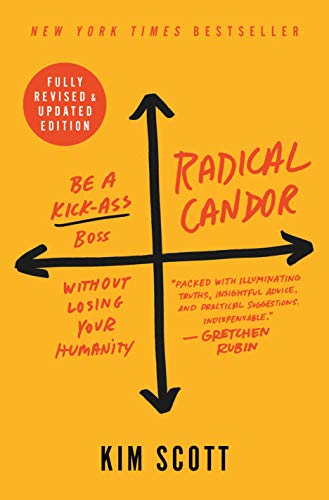
I really loved Radical Candor by Kim Scott. I felt like I could see myself and people I’ve managed in each of her examples and loved the thoughtful and applicable suggestions provided in the book. Another one that I love is The Fifth Discipline Fieldbook by Peter Senge, Art Kleiner, Charlotte Robert, Richard Ross, and Bryan Smith. I think part of management is providing hands-on, interactive, engaging structures in order to have important and impactful conversations. This book offers tons of methodologies, ideas, and brainstorming techniques in order to facilitate conversations.
I think goal setting is a really important exercise to provide a baseline and check in of what someone wants to accomplish. I know mentioned goal setting is often met with eye rolls but it’s less about the actual goal and more about writing things down and having an understanding between you and the folks that report to you. What do they want to be able to say about themselves and their career in a year? What are the areas they know they need to work on? Are there other areas I’ve noticed as a manager that I want to mention? Once there’s a mutual agreement and understanding of this information, I can make sure to have conversations about it, look out for opportunities, and note instances that come up where i’m seeing growth or regression.
I have a podcast called Parent Driven Development (https://www.parentdrivendevelopment.com/) which I started just before my second child was born. It’s been a great opportunity to bring visibility to parents in the industry who face unique challenges. There are also a lot of lessons that parents bring to the industry about empathy, compromise, understanding the perspectives of others, and maintaining a work/life balance whether they’re ICs or managers. We’ve enjoyed exploring a lot of those issues and topics as a podcast panel.
Blog: http://daydreamsinruby.com
GitHub: asheren
LinkedIn: https://www.linkedin.com/in/apmcmillan
Twitter: @allie_p
… [Read more](https://www.managersclub.com/unveiling-the-secrets-to-new-manager-success/ "Unveiling the Secrets to New Manager Success")
… [Read more](https://www.managersclub.com/accelerating-ai-in-your-team-strategies-for-success/ "Accelerating AI in Your Team: Strategies for Success")

In this video, Rajesh Janakiraman, an engineering manager at Google, shares his insights and experiences on leading business critical projects while ensuring his team remains motivated and doesn’t burn out. Business critical projects can be intense, high visibility deadlines that often shift roadmaps and include executive-level oversight. Building the right team, maintaining communication, and managing expectations around these challenging projects are crucial to preventing burnout and driving results.

Are you on the lookout for a collaborative, engaging community tailored specifically for your role? Look no further! Introducing the Managers Club Discord server dedicated to leadership in engineering. We’re a community of engineering managers, team leads, and CTOs who come together to share experiences, best practices, and insights.

Are you an Engineering Manager curious about gauging your effectiveness and success in your role? In this insightful episode, we dive deep into metrics and stakeholder management with Ivan Bilan, an experienced engineering manager. Discover the core metrics for measuring engineering manager performance in people leadership, product quality, delivery, and self-promotion, and learn the importance of stakeholder management in driving team success. In this video, we will be looking at how to measure success and performance for managers. We’ll be exploring different methods and tools that managers can use to measure their own success, as well as the success of their team. Don’t miss out on these valuable insights and strategies!

In this engaging conversation, experienced technical recruiter Kate Parton shares vital advice and insider tips for candidates seeking job opportunities in the tech industry. She discusses red flags to watch for, navigating compensation discussions, common misconceptions about the recruiting process, and how to make the most of your partnership with a recruiter. Discover the role of social media and the rise of AI in the hiring process. Kate shares valuable tips and advice on making your job search and interview process smoother and more successful. Tune in for an insider’s perspective on the world of recruitment and how to avoid common pitfalls!